Buy a basket
My work is represented by the Alberta Craft Council and sold through their shop at cSPACE Marda Loop in Calgary.
Half Moon Baskets
I’m a basketmaker in central Alberta. I live in a patch of forest in Ponoka County and cut willow from the ditches out on the prairie, grow some of my own, and teach other people to weave with it.
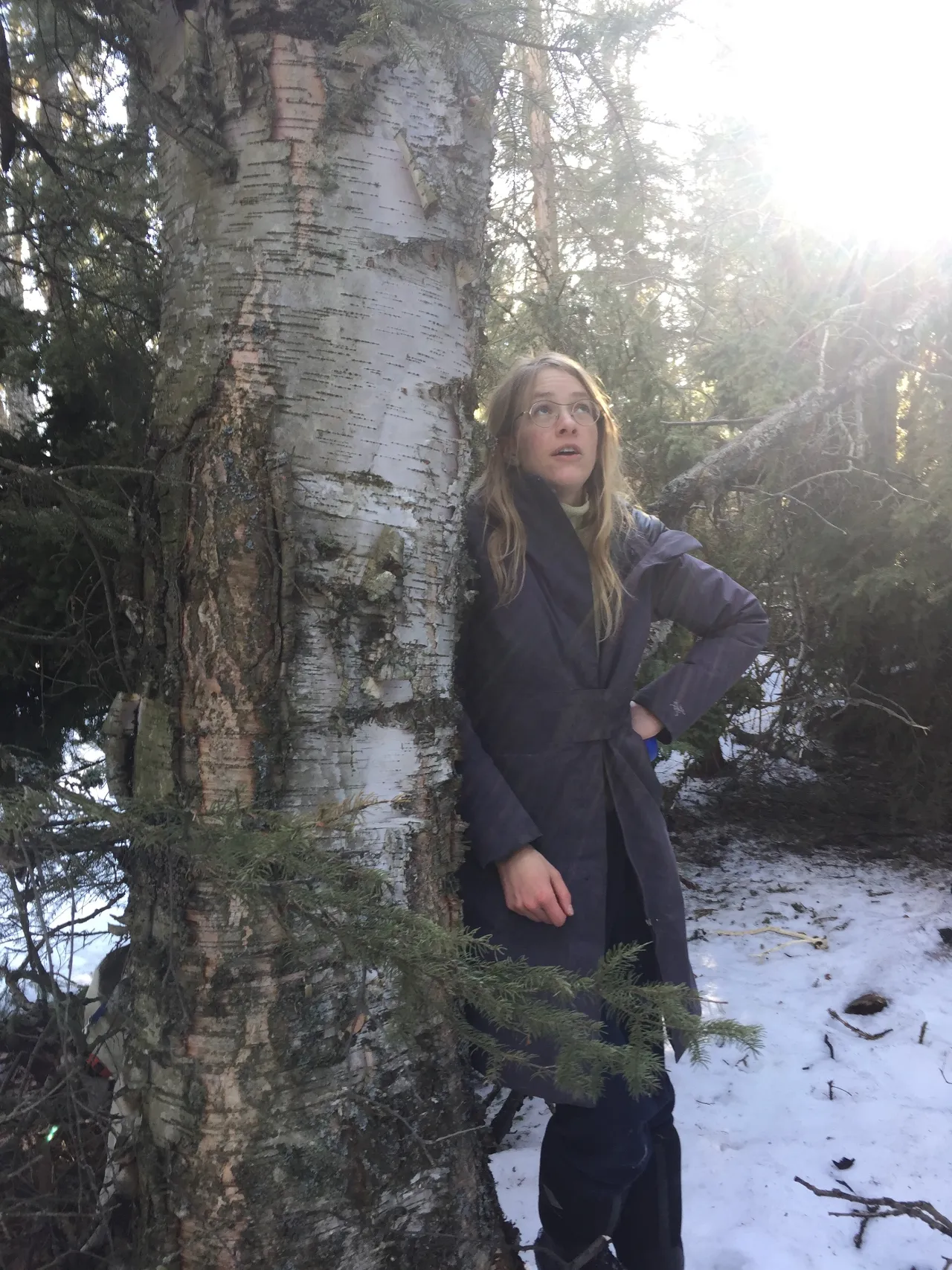
My work is represented by the Alberta Craft Council and sold through their shop at cSPACE Marda Loop in Calgary.
Workshops, weekends, and retreats across Alberta, from an afternoon to three days.
Before I found basketry, I had been working with leather, exploring natural dyes and tanning. I loved the making, but I was struggling with everything around it. I couldn’t find a way to do the tanning and dyeing that felt responsible to the place where I was living.
I started wondering what kind of craft would let me work more directly with the land around me.
Not long after, Maryann Borch organized a workshop with a traditional Polish basketmaker on a farm near Edmonton, and I went to weave my first basket.
What stayed with me was not only the willow. It was the room full of people learning together. It was hearing Maryann talk about milking her cow and making cheese in baskets she had woven from cattail. Craft was not separate from the rest of life. It belonged to the land, to food, to family, and to the people gathered around it.
Learning basketry also meant learning to see the landscape differently.
The first winter I went looking for willow, I bundled up, took a pair of pruners, and drove the backroads for an afternoon. I had absolutely no idea what I was looking at. Without their leaves, everything was simply sticks. I stood in a ditch beside the highway with cars going past, thought to myself, “Nope,” got back in my car, and went home.
I waited for summer.
With the leaves came differences. Leaf shapes, colours, growth patterns, and the way different willows held themselves along a ditch or at the edge of a field. Once I could see willow, I couldn’t unsee it. It was everywhere. In ditches, along fence lines, at the edges of fields.
By the following winter, I was ready.
That way of paying attention continues to shape my work. Every basket begins long before the weaving. Willow is cut while dormant. Cattail and bulrush are gathered in summer. Bark is peeled when the sap is running and releases it from the wood. Everything comes home to be sorted, dried, bundled, stored, soaked, and prepared before the first row is woven.
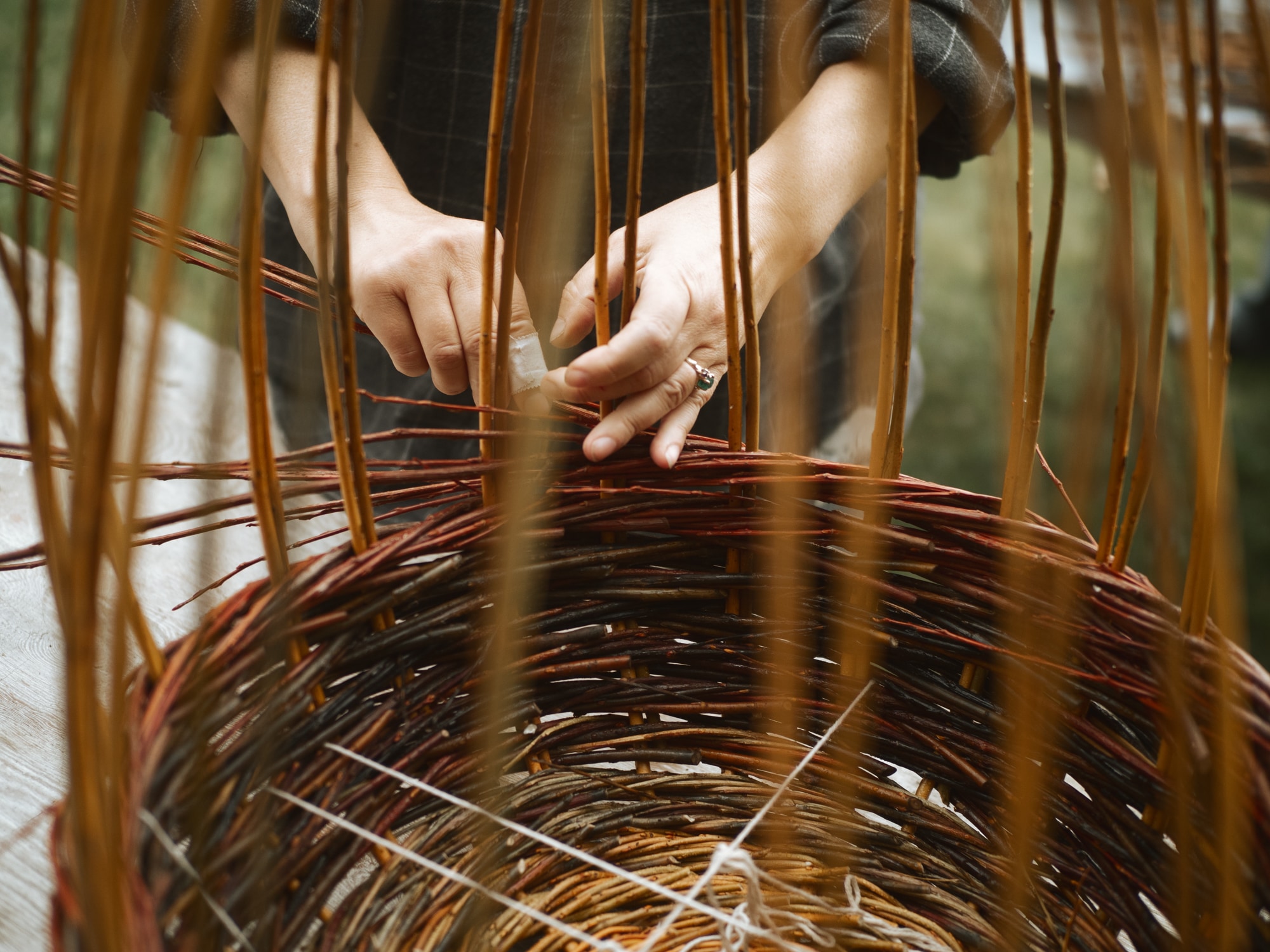
Most of the willow I work with is wild. Native willow grows in the ditches and wet places around me without anyone planting it, and no two rods are quite the same. Some are long and slender. Others are crooked, branchy, or thick.
That unevenness is part of what I love about it. You work with the rod you have rather than the one you might have ordered from a catalogue.
I grow cultivated basketry willow too, including varieties traditionally used in European basketmaking. Each year I learn a little more about which ones are happy here, how they respond to our winters, and what they offer when it comes time to weave.
Willow is only part of the year.
Cattail leaves come in summer while they are still green. Bulrush grows in the same wet ground, round-stemmed and pithy, softer to work with than willow will ever be. Willow bark is harvested when the sap rises and the bark peels cleanly from the wood.
Working this way has changed my sense of the seasons. There is a time for cutting willow and a time for peeling bark. A time for gathering cattails and a time when the materials are simply left to grow.
Teaching has become part of my own weaving.
There is a particular point in a workshop that I love. In the beginning, everyone is watching closely. Every movement is a question. Which rod comes next? Does this go over or under? Am I holding this correctly?
And then, somewhere along the way, the room changes.
Conversation falls away. Hands begin to find their rhythm. People stop thinking about every individual movement and simply begin to weave.
I teach workshops and retreats throughout Alberta, often beginning with people who have never held a willow rod before. Alongside weaving a basket, we talk about the plants themselves. Where they grow, how to recognize them, when to harvest them, and what needs to happen before they are ready to weave.
I want people to leave with more than the object they made. I want them to begin noticing the materials growing around them and to have a foundation of skills they can continue building on after the workshop is over.
In 2024, I helped form the Alberta Basketry Guild. We gather to plant, harvest, weave, teach, and learn together.
Much of that work is ordinary. Organizing workshops. Planting willow. Preparing materials. Creating places where someone who is curious about basketry can turn up and find another person willing to show them how to begin.
But I have come to think that this ordinary work matters.
Basketry knowledge lives in people. It survives because someone makes the conditions for another person to learn.
When I talk about weaving willow back into our communities, this is what I mean.
Not basketry preserved as something from another time, but basketry woven into ordinary life again. Materials gathered from the places around us. Baskets made to be carried, filled, stained, repaired, and used. People coming together to work and learn from one another. Knowledge handed from one person to the next.
The willow is still growing in the ditch. The cattails still rise from wet ground. The knowledge is still held by people willing to share it.
Sometimes we only need to learn how to see it.
My work is represented by the Alberta Craft Council, and finished baskets are available through their shop at cSPACE Marda Loop in Calgary. A small basket is about an hour and a half of weaving, so what is on the shelf changes through the year.
If you’d like to talk about baskets, workshops, or anything you’ve been woven into, write to me at freyja@halfmoonbaskets.com.